
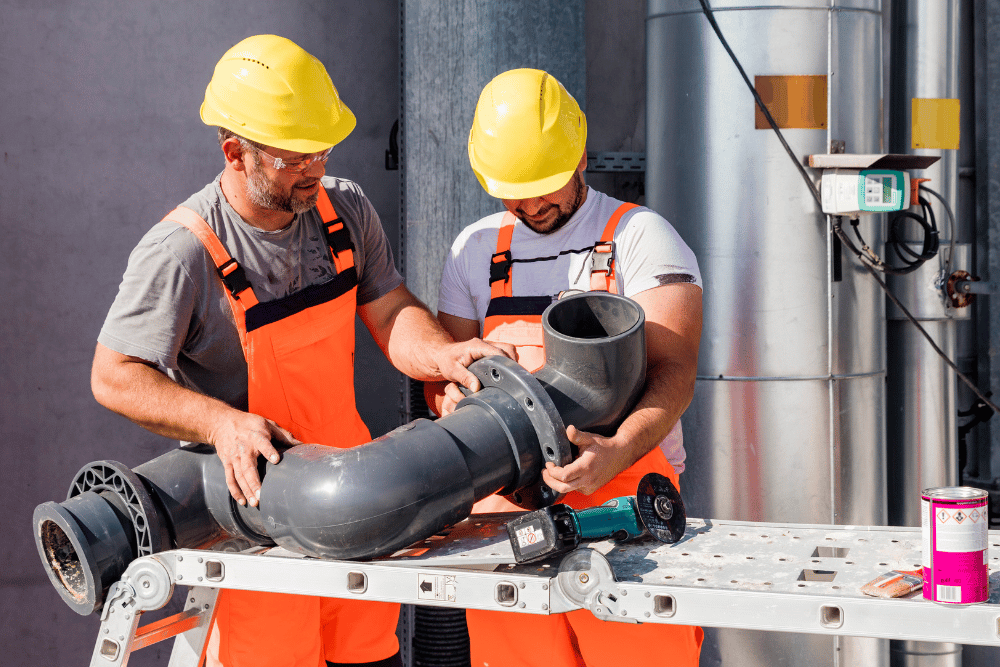
Paper permits create bottlenecks, blind spots, and delays – exactly where risk is highest.
The Authorization Gap: Why High-Risk Work Stalls in Compliance
When a contracted crew is performing routine work, your primary concern is process adherence. When that crew is performing high-risk work, such as hot work, confined space entry, or complex energy isolation (LOTO) – the burden of EHS assurance shifts entirely. It moves from general auditing to Control of Work (CoW), and this is where most paper-based systems utterly collapse.
The High-Stakes Complexity
The unique burden of Control of Work is that safety is entirely conditional. Before a worker can begin a high-risk task, a defined sequence of non-negotiable prerequisites must be met, verified, and signed off:
- Isolation: Has the energy been fully locked out?
- Verification: Is the atmospheric monitor calibrated and active?
- Competency: Is the lead worker certified for this specific task?
- Coordination: Are other permits active in the immediate area?
For contracted crews, this complexity is amplified by poor communication and procedural unfamiliarity. When EHS relies on paper checklists to manage these prerequisites, the system fails to enforce the conditionality of safety.
The Paperwork Bottleneck
The permit-to-work (PTW) process often becomes the choke point, not a safety checkpoint. A permit might take hours to travel through a manual approval chain – from the field supervisor to the area manager, to the EHS sign-off.
This is not a velocity problem; it’s a bottleneck problem. When operational demands pressure the EHS team, the human tendency is to rush the paperwork, turning the permit into a procedural formality after the safety review, rather than a non-negotiable authorization before work starts. This lag time delays productivity and, critically, increases the chances that a prerequisite completed earlier is no longer valid (e.g., the atmospheric condition has changed).
You cannot manage high-hazard, conditional risk with sequential paper forms. True EHS control requires non-negotiable, digital verification of all pre-job conditions enforced by a central system, ensuring that work only starts when safety prerequisites are met, and only for as long as they remain valid.
The Vulnerability of Verbal and Vague Control
The assumption that a supervisor’s signature on a paper form equates to a safe job is the biggest vulnerability in traditional Control of Work (CoW). For transient, contracted crews, the system breaks down not because of malice, but because of poor coordination and vague verification.
The Sign-Off Fallacy: Proving Presence, Not Adherence
A paper permit asks for a signature, usually confirming that the worker understood the hazards. However, it rarely requires the supervisor to physically verify that the prerequisites are still met right before the job starts. This leads to the Sign-Off Fallacy:
- The permit was signed at 7:00 AM, but the weather changed dramatically at 9:00 AM.
- The LOTO was checked, but a second contractor group accidentally re-energized the equipment at a distant point.
- The supervisor simply signs based on verbal assurance rather than physical verification at the point of work.
This leaves EHS with a piece of paper that only proves attendance, not adherence to the conditional safety status required for the task.
The Coordination Crisis: Managing Multiple Concurrent High-Risk Jobs
In dynamic operations, multiple contracted teams often work in adjacent areas, potentially conflicting with each other (e.g., hot work happening directly above a chemical storage tank). Paper permits exist in silos—the supervisor for Crew A doesn’t know the permit status for Crew B.
When permits are manually managed, EHS cannot easily track simultaneous operations (SIMOPs). This lack of centralized awareness prevents the instant coordination needed to:
- Prevent Interference: Stop a high-risk permit from being issued because an incompatible permit is active 50 feet away.
- Coordinate Handover: Ensure that if a job runs into a shift change, the incoming supervisor is fully briefed on the exact conditions, isolation points, and remaining hazards.
The De-authorization Dilemma: Failing to Instantly Stop Work
Paper permits are easily issued, but nearly impossible to instantly de-authorize. If an environmental condition changes (e.g., severe weather, gas leak) or an operational emergency requires a rapid shutdown, EHS needs the power to invalidate every relevant permit simultaneously. With manual systems, this requires a physical person to find the team in the field and verbally halt the work – a delay that can be catastrophic. The absence of a central, digital kill switch for active permits is a massive, unmanaged operational risk.
The Digital Answer: Enforcing Conditions Before Authorization
You cannot manage high-hazard, conditional risk with sequential paper forms. True EHS control requires non-negotiable, digital enforcement to ensure that work only starts when safety prerequisites are met, and only for as long as they remain valid. The digital platform enforces this by acting as a system of truth and authority, moving EHS from mere procedural compliance to operational certainty.
Mandatory Pre-Job Risk Assessments
The permit process must be conditional on a successfully completed pre-job risk assessment that verifies the current state of the work environment. IZI Safety ensures that the system acts as a digital gatekeeper, forcing the supervisor and worker to complete a verified risk assessment (such as POWRA) before a permit can even be generated. This ensures Digital Verification (required checks) and Conditional Stop.
Centralized Digital Permit Management
To eliminate the paperwork bottleneck and the coordination crisis, the permit-to-work system must be centralized and operate in real-time. IZI Safety centralizes the issuance, approval, and tracking of all work permits digitally. This allows EHS managers to view a complete map of all active permits across all sites instantly. This visibility is essential for SIMOPs management and provides the necessary mechanism for Remote Authorization and Instant De-authorization.
From Procedural Compliance to Operational Certainty
The Permit Paradox proves that in high-turnover operations, relying on paper to manage conditional safety requirements turns a safety mechanism into a liability. The velocity, complexity, and coordination challenges inherent in high-risk work demand digital enforcement.
The question is simple: Are you confident that a critical hazard spotted today will be instantly managed, or are you hoping a piece of paper will protect you tomorrow? Mastering high-risk exposure with a contracted workforce means replacing the sign-off fallacy with the verifiable certainty of a centralized EHS system.
About IZI Safety
IZI Safety is a mobile-first safety and compliance platform purpose-built for high-turnover, frontline operations. Trusted by over 125,000 workers in 50 countries, it enables leading EHS teams to standardize and streamline safety procedures, audits, permits, and training – keeping temporary and contract workers safe, compliant, and productive in any language, at any scale.